 Understanding ED



Regaining Bladder Control After Prostate Treatment
Urinary leakage after prostate cancer or BPH surgery is a common and distressing side effect. This guide explains why Stress Urinary Incontinence (SUI) happens and explores the effective, long-term solutions available to help you regain control and live confidently.

On this page
Understanding Stress Urinary Incontinence After Prostate Surgery
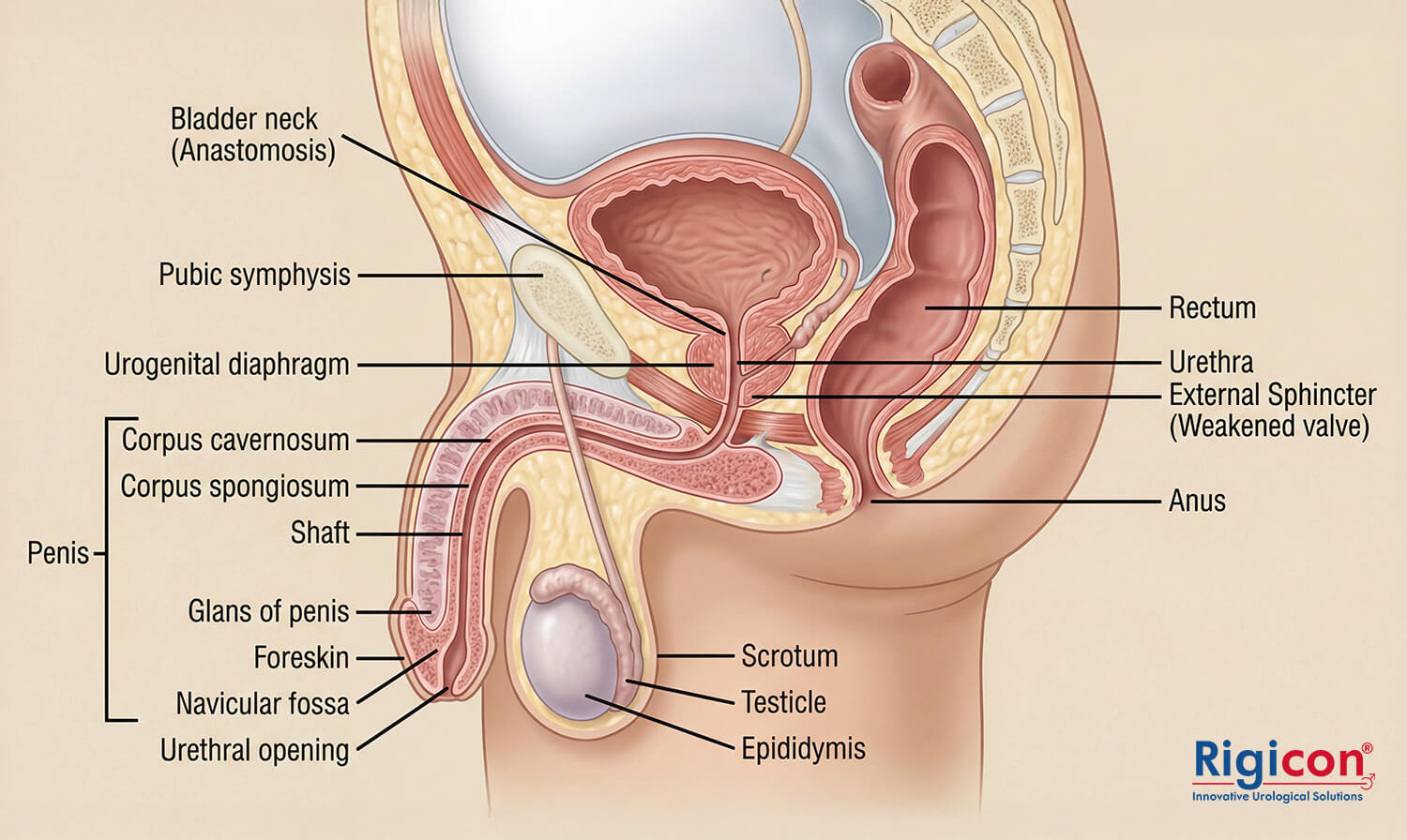
To understand why leakage occurs, it helps to know the anatomy. Your urinary sphincter is a muscle that acts like a valve, staying closed to hold urine in the bladder and opening only when you choose to urinate. Prostate surgery (radical prostatectomy) can sometimes damage this sphincter muscle or affect the nerves that control it.
Two Main Causes
Sphincter Weakness
Direct injury to the sphincter muscle during surgery can weaken its ability to stay tightly closed, allowing urine to leak during moments of physical stress (like coughing, laughing, or lifting).
Loss of Bladder Neck Support
The prostate gland provides natural support to the bladder neck and urethra. Removing it can alter this anatomy, contributing to leakage.
Your Path to Dryness
The approach to treating SUI after prostate surgery is gradual, starting with conservative methods before moving to more definitive surgical solutions if leakage persists.
Pelvic Floor Exercises (Kegels)
The first step is always to strengthen the pelvic floor muscles. A specialized physiotherapist can guide you to ensure you are doing these exercises correctly for maximum benefit.
Medical Treatment
Nexetin® is a medication that can help strengthen the urinary sphincter muscle and improve bladder control. It may be recommended as part of a comprehensive treatment plan.
Male Sling
For men with mild to moderate leakage, a surgically placed mesh sling can provide support to the urethra, often improving continence. This is a less invasive surgical option.
Artificial Urinary Sphincter (AUS)
For moderate to severe SUI, the AUS is the most effective and reliable long-term solution. It is a surgically implanted device that gives you back full control over urination.
Learn MoreThe Artificial Urinary Sphincter: A Reliable, Long-Term Solution
The Artificial Urinary Sphincter (AUS) is recognized by urologists as the most effective treatment for moderate to severe SUI in men, especially after prostate surgery. It is designed to mimic the function of a healthy natural sphincter.
How It Works
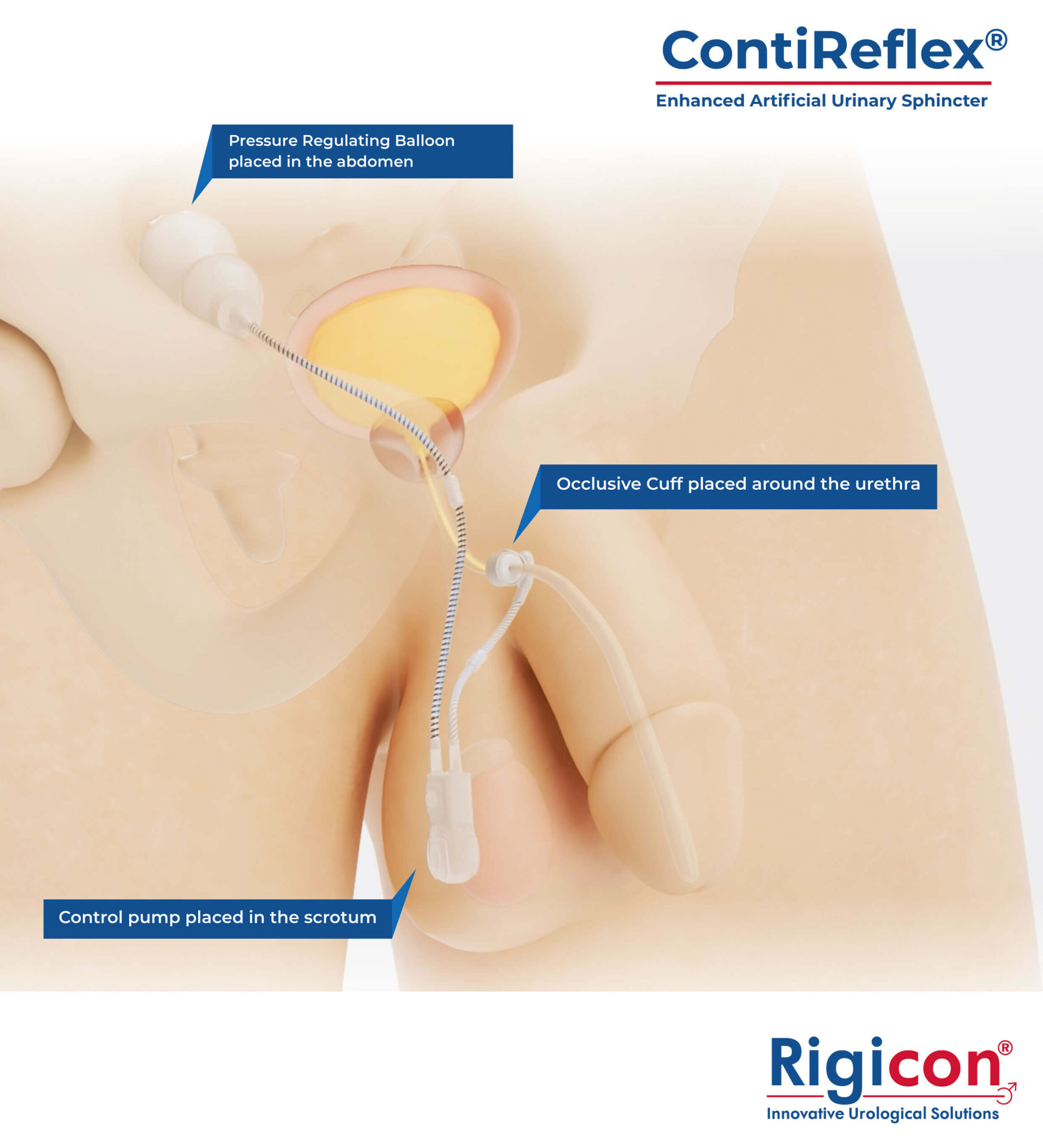
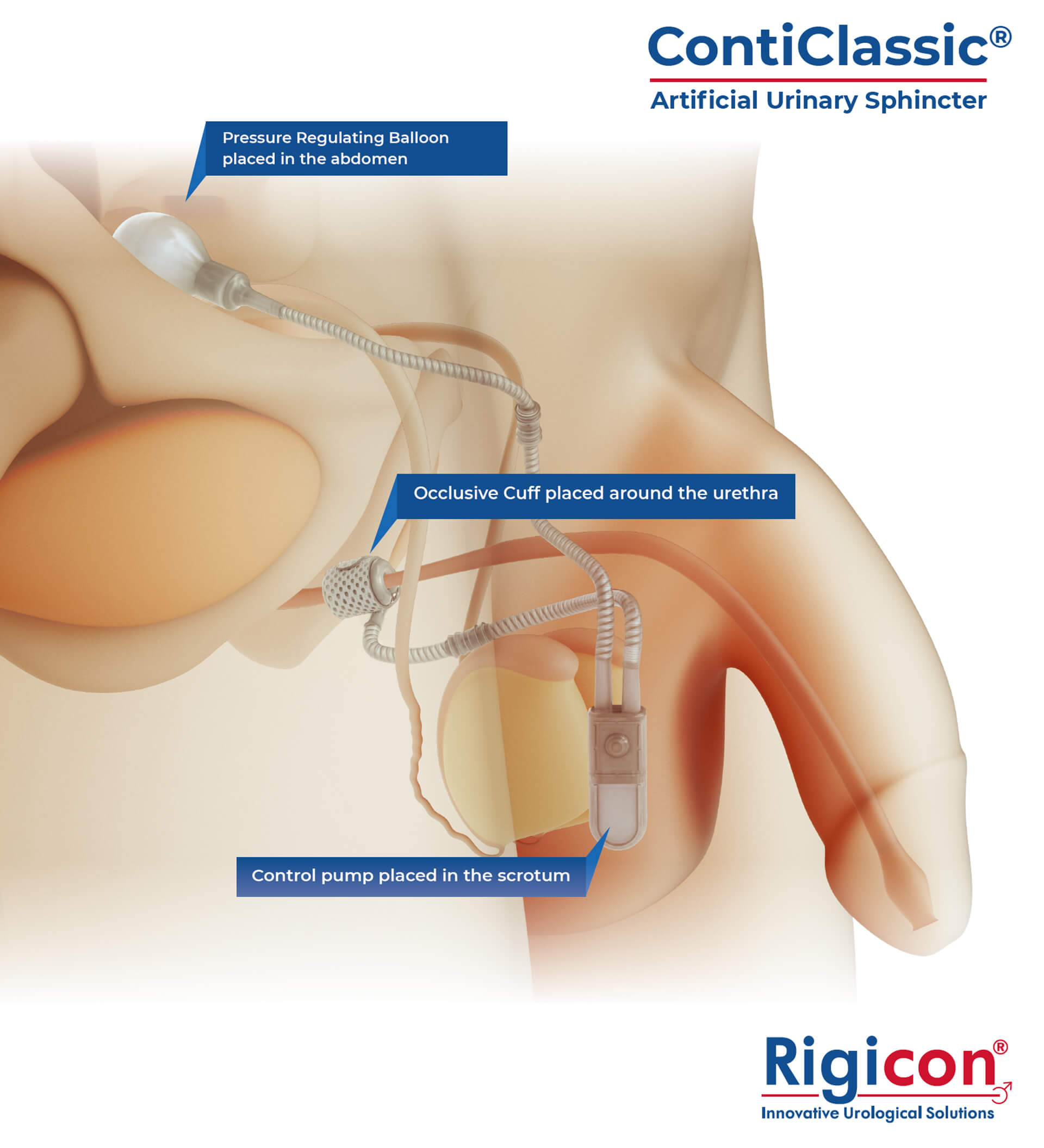
The device has three components: a cuff that fits around the urethra, a pump placed in the scrotum, and a pressure-regulating balloon in the abdomen. The cuff remains closed to keep you dry. When you need to urinate, you simply squeeze the pump to open the cuff. It automatically closes again after a few minutes.

Artificial Urinary Sphincter
A reliable and proven solution offering dependable continence control. With five different pressure-regulating balloon options, it can be customized to your specific anatomical needs.
Learn more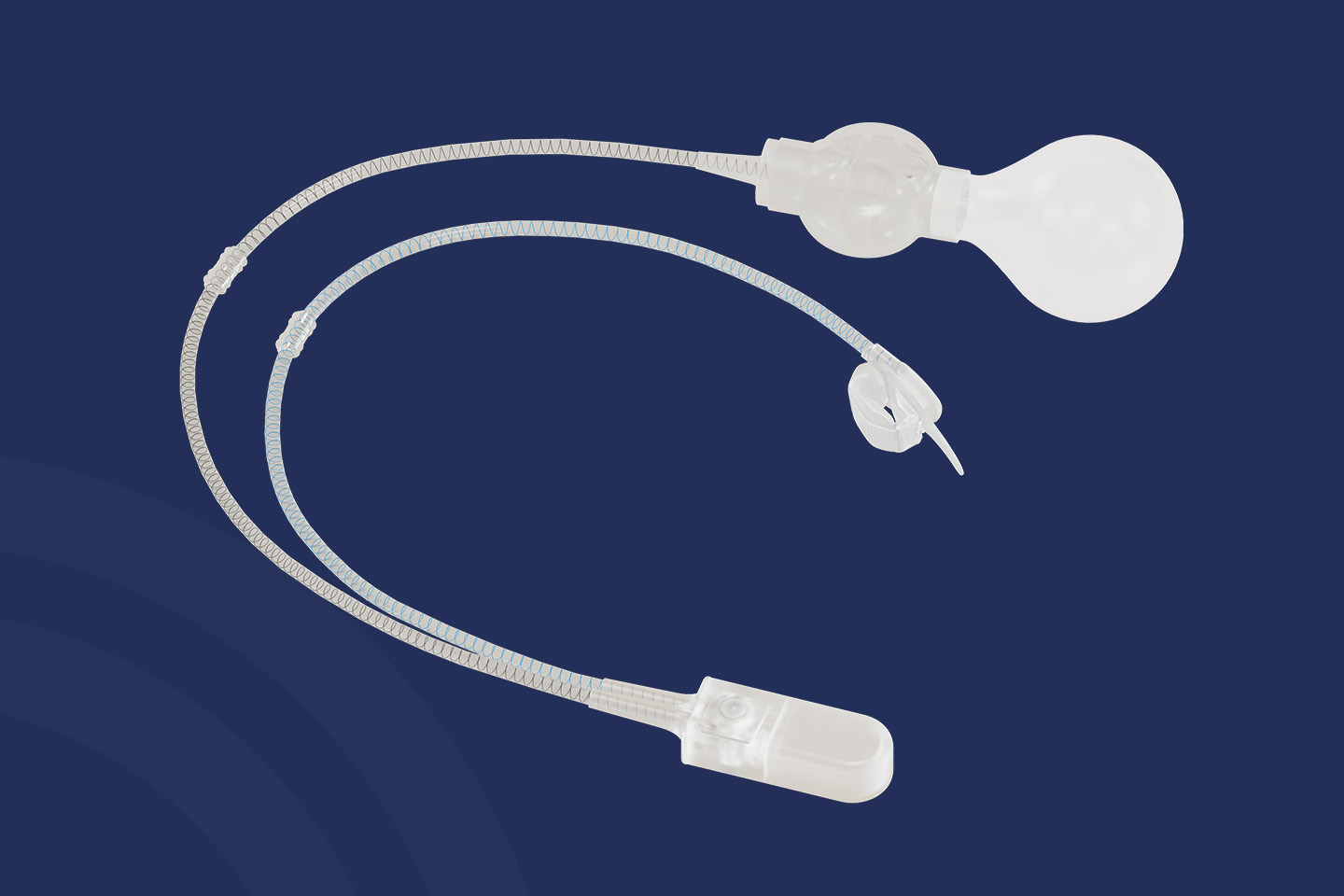
Enhanced Artificial Urinary Sphincter
The first and only device of its kind in the world, featuring a Smart Reflex Balloon that automatically adapts to changes in body pressure, providing extra protection against leaks during physical activities.
Learn moreComparing your options
Rigicon offers two advanced Artificial Urinary Sphincter solutions: ContiReflex® and ContiClassic®. Both provide excellent control of urinary incontinence but with different features to meet individual patient needs.
| Feature | ContiReflex® | ContiClassic® |
|---|---|---|
| Technology | Smart Reflex Balloon that adapts to pressure changes | Standard pressure regulation system |
| Pressure adaptation | Dynamic - adjusts in real-time to abdominal pressure | Fixed - maintains consistent pressure |
| Pressure options | Adaptive pressure | Five different pressure options (40-89 cm H₂O) |
| Cuff sizes | Multiple sizes for optimal fit | Multiple sizes for optimal fit |
| Urethral protection | Lower resting pressure with dynamic increases when needed | Night deactivation option to protect urethral tissue |
| Coating | HydroShield™ hydrophilic coating | HydroShield™ hydrophilic coating |
| Connectors | EasyClick™ tool-free connectors | EasyClick™ tool-free connectors |
| Best for | Men with variable activity levels and higher risk of stress leakage | Men who prefer consistent pressure with night deactivation option |
| Compatibility | Can be used with Infla10® Penile Prosthesis | Can be used with Infla10® Penile Prosthesis |
Need help choosing? Both options are fully internal and provide reliable results. Your surgeon will help you determine the best choice based on your lifestyle and preferences.
Is an Artificial Urinary Sphincter Right for You?
An AUS implant may be the right choice if you identify with the following:

You Experience Stress Urinary Incontinence
You leak urine when you cough, laugh, exercise, or lift something heavy. This is the primary indication for an AUS.

You Want a Reliable, Internal Solution
You are looking for a permanent, discreet solution that restores bladder control without the need for pads or external clamps.

You Have Sufficient Hand Dexterity
You have the ability to squeeze a small, simple pump (placed in the scrotum) to urinate. Your surgeon will confirm this with you.
The AUS Journey: What to Expect
Understanding each step of your treatment journey helps you prepare and know what to expect along the way.
Your journey begins with a consultation with a urologist specializing in prosthetic surgery. They will perform tests (like urodynamics) to confirm that an AUS is the right choice for you and discuss the procedure in detail.
The surgery takes about 1-2 hours under general or spinal anesthesia. It involves small incisions in the perineum (the area between the scrotum and anus) and the lower abdomen.
After surgery, the device is left deactivated for 4-6 weeks to allow your body to heal. You will still experience leakage during this time. Swelling and soreness are normal and will subside.
At your follow-up appointment, your surgeon will activate the AUS and teach you how to use the pump. This is a simple and straightforward process.
Once you are comfortable using the device, you can return to all your normal activities with confidence. The AUS is completely concealed and allows you to control urination, putting an end to leakage.
Frequently Asked Questions
Is the AUS surgery painful?
You will have discomfort and swelling after the surgery, which is managed with pain medication. Most of the pain subsides within the first couple of weeks. The long-term result is not painful.
Will people know I have an AUS?
No. The device is implanted entirely inside the body. There are no visible external components, so it is almost completely discreet.
How do I use the pump?
The pump is a small, soft bulb located in the scrotum. It is easy to find and requires just a few gentle squeezes to open the cuff. Your surgical team will give you full instructions.
How long does an AUS last?
Modern Artificial Urinary Sphincter (AUS) devices are designed for long-term use and have demonstrated durable outcomes over extended follow-up periods. According to a large-scale study involving 1,154 patients with a median follow-up of 5.4 years, overall device survival was 72% at 5 years, 56% at 10 years, 41% at 15 years, and 33% at 20 years. While some patients may require revision or replacement surgery over time due to mechanical failure, urethral atrophy, or infection/erosion, the majority of patients report sustained improvement in quality of life, with over 80% describing their condition as "much better" even more than 10 years after surgery4.
Can I have an MRI with an AUS?
Yes, Rigicon's AUS devices are MR-Conditional. You must always inform the radiology staff that you have an implant so they can follow the correct safety procedures.
Ready to take the next step?

Speak privately with a Patient Counselor
Get personalized information about Artificial Urinary Sphincter in a confidential consultation. Our patient counselors understand the sensitive nature of urinary incontinence and provide judgment-free support.
What you'll discuss:
- Your specific situation and concerns
- How the Artificial Urinary Sphincter works
- Recovery expectations and timeline
- Finding the right surgeon for you

Private referral to a Rigicon Global Reference Center
Connect with experienced urologists in your area who specialize in Artificial Urinary Sphincter implantation. Our surgeon directory includes qualified professionals familiar with Rigicon products.
How it works:
- Share your location and needs
- We identify up to three reference centers in your area
- With your consent, the clinics contact you directly
- Free of charge for patients
Your privacy is our priority: Your enquiry is confidential. We never sell personal data.
Rigicon® Talks Videos
Rigicon Talks brings together doctors from around the world to share knowledge, helping patients better understand their treatment options.

Top 10 Questions About Artificial Urinary Sphincters
| Time | Question | Play |
|---|---|---|
| 00:00 | Welcome to Rigicon Talks | |
| 00:30 | Prof. Koenraad van Renterghem | |
| 01:10 | Mr. Rowland Rees | |
| 01:42 | Dr. Tobias Pottek | |
| 02:20 | How do I know if I am a candidate for the artificial urinary sphincter? | |
| 04:15 | How does the artificial urinary sphincter work? | |
| 06:35 | Can I choose the type of AUS I receive? | |
| 10:12 | Will the AUS be noticeable to others? | |
| 12:55 | What can I expect during recovery from AUS surgery? | |
| 15:56 | How do I prepare for AUS surgery? | |
| 20:50 | What should I discuss with my doctor before getting an AUS? | |
| 26:35 | Can I still engage in physical activities with an AUS? | |
| 30:33 | Can I have an MRI with an artificial urinary sphincter? | |
| 31:55 | How long does an AUS last, and what is the likelihood of needing a revision? | |
| 36:45 | Last advice |

The Patient and Nurse Perspective in Prosthetic Urology
| Time | Question | Play |
|---|---|---|
| 00:40 | What is the nurse's role in prosthetic urology surgeries, and how do nurses help patients prepare for the procedure? | |
| 02:23 | How can nurses help patients manage their expectations and concerns before surgery? | |
| 03:26 | What does the typical recovery process look like after surgery? | |
| 05:19 | How does teamwork between nurses and surgeons impact patient care and outcomes in prosthetic urology surgeries? | |
| 06:06 | What advice would you give to patients considering an implant? |
Discover More
Patient Education Resources


Prosthetic Urology FAQs
Evidence-based FAQs on artificial urinary sphincters, penile and testicular prostheses—grounded in peer-reviewed research and international guidelines

Prosthetic Urology Glossary
Evidence-based glossary covering penile implants, Artificial Urinary Sphincter, ED treatments, and surgical terms in prosthetic urology
Specialized Treatment Information

Penile Implant Revision Options
Comprehensive solutions for revision surgeries and complex cases requiring specialized approaches

Solutions After Prostate Cancer Treatment
Specialized ED treatment options for patients following prostatectomy and other prostate cancer treatments

Solutions for Prostate Surgery & Diabetes ED
Specialized treatments for erectile dysfunction related to prostate surgery and diabetes complications

When Oral ED Medications No Longer Work
Advanced treatment options for patients who no longer respond to oral ED medications

Urinary Sphincter Solutions After Prostate Cancer
Artificial urinary sphincter options for managing incontinence after prostate cancer treatment
Rigicon Talks
Listen to expert discussions, patient stories, and educational content about prosthetic urology on your favorite platform.
Disclaimer
Important Notice:
This website provides educational information only and does not constitute medical advice. Product availability varies by country. Always consult with qualified healthcare professionals for medical decisions.
Regulatory Information:
Rigicon products are medical devices that require prescription and surgical implantation by qualified urologists. Individual results may vary.
References:
[1] European Association of Urology (EAU) Guidelines on Urinary Incontinence, 2020.[2] ContiReflex® and ContiClassic® products are not available for sale within the United States.
[3] ContiReflex® (IFU), ContiClassic® (IFU)
[4] Boswell TC, Elliott DS, Rangel LJ, Linder BJ. Long-term device survival and quality of life outcomes following artificial urinary sphincter placement. Transl Androl Urol. 2020;9(1):56-61. doi:10.21037/tau.2019.08.02. PMCID: PMC6995928.